
Moisture-aware planning
We consider leaks, seepage, indoor humidity, condensation, and ventilation before cleanup begins.
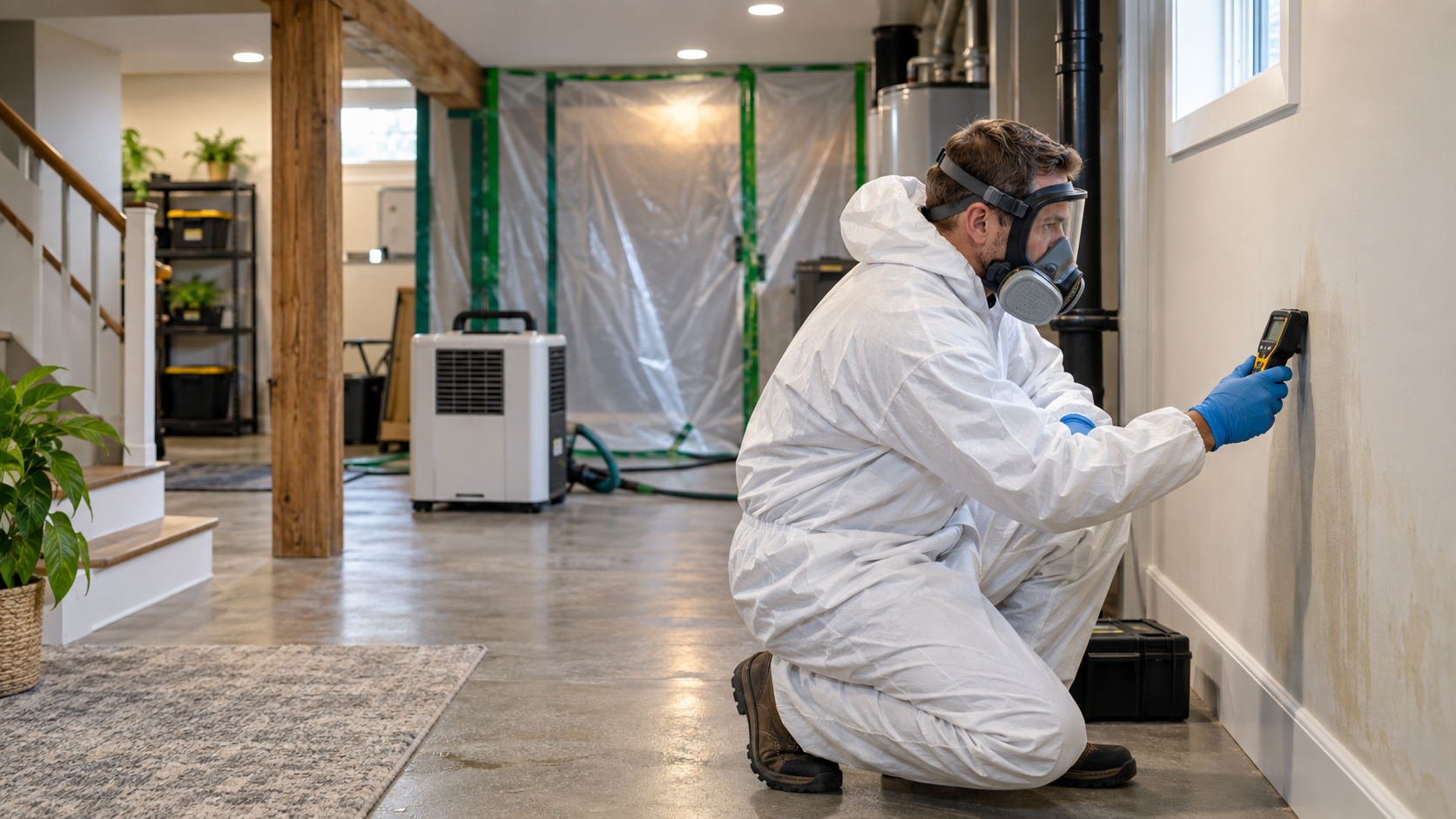
Mold cleanup for Gettysburg area homes
Inspection-minded containment, cleanup, and moisture guidance for homes and small properties across Gettysburg and nearby Adams County communities.
Finding mold in a basement, attic, bathroom, or finished room can create immediate questions about safety, damage, and cost. Keystone Mold Remediation Gettysburg PA helps property owners move from uncertainty to a practical plan. We begin with the affected material and the likely moisture source, then explain whether the next step should be inspection, drying, limited cleaning, or professional remediation.
Mold removal and remediation are related, but the useful goal is larger than making a stain disappear. A sound plan considers containment, damaged materials, cleaning methods, drying, and the leak, humidity, or condensation that allowed growth to develop. This moisture-first approach is important in Gettysburg homes where stone foundations, older additions, finished basements, roof transitions, and seasonal humidity can create concealed damp areas.
People often search for mold remediation near me, mold mitigation near me, or mold abatement near me when they need a local response. Those terms point to the same basic need: identify the extent of the problem, protect unaffected spaces, remove or clean materials appropriately, and correct the conditions that support regrowth. Call us to discuss what you are seeing or request a mold remediation estimate.
Professional mold cleanup should match the material and condition of the space. Nonporous surfaces may be cleanable, while saturated drywall, insulation, ceiling tile, or other porous materials may need controlled removal. The plan can also change when growth is concealed behind finishes, connected to sewage or flooding, or spread through a mechanical system.
As a local mold removal company, we focus on understandable scopes rather than vague promises. Work may include establishing a contained area, protecting floors and belongings, controlling dust, removing materials that cannot be restored, cleaning remaining surfaces, and confirming that the work area is dry. A mold remediation specialist may also recommend that plumbing, roofing, drainage, ventilation, or insulation work be completed by the appropriate trade.
We consider leaks, seepage, indoor humidity, condensation, and ventilation before cleanup begins.
Containment and careful material handling help keep cleanup focused on the affected space.
Wood, masonry, drywall, insulation, and stored contents do not all receive the same treatment.
You receive a plain explanation of remediation priorities and related repairs that may be needed.
A mold inspection can be useful when the source is uncertain, an odor has no visible cause, staining keeps returning, or a property transaction requires better documentation. An inspection typically starts with history, visual observations, and moisture investigation. Sampling is a separate tool and is not automatically necessary for every visible mold condition.
When testing is justified, the purpose should be clear. Surface or air samples may help distinguish an uncertain condition, support a written protocol, or document clearance after work. Independent laboratory analysis and post-remediation verification can be especially valuable when a third-party record is required. Inspection findings should guide the scope instead of becoming a substitute for correcting active moisture.
Our inspection and remediation pages are separated so visitors can choose the intent that fits. If you already know there is affected material and a water source, start with mold remediation. If you need help understanding whether mold is present or how far moisture extends, begin with an inspection conversation.
Basements and attics are common trouble spots, but they develop mold for different reasons. Basement mold removal often involves foundation seepage, humid air meeting cool surfaces, plumbing leaks, stored cardboard, or damp finished walls. Cleanup should address both visible growth and the moisture behavior of the lower level.
Attic mold removal commonly begins with roof leaks, bath fans exhausting into the attic, blocked soffit vents, uneven insulation, or warm indoor air condensing on cold roof sheathing. Surface treatment alone will not solve a continuing ventilation or water-entry problem. The remediation plan should connect cleanup with corrective work.
Both areas may contain limited-access spaces and materials that hide the true extent of damage. We ask about recent storms, plumbing events, HVAC changes, renovations, and seasonal patterns before proposing next steps. That context helps keep the scope tied to evidence rather than assumptions.
Containment, removal, cleaning, and drying support for visible or suspected mold growth.
Learn moreMoisture checks, visual inspection, and practical next steps before remediation work begins.
Learn moreFocused cleanup for damp basements, finished lower levels, storage rooms, and crawl-adjacent areas.
Learn moreAttic mold cleanup with attention to ventilation issues, roof leaks, and sheathing conditions.
Learn moreMold remediation costs depend on the size and accessibility of the affected area, the materials involved, the containment needed, and whether hidden damage is discovered. A small accessible area on cleanable material is different from growth behind finished walls or throughout wet insulation. Testing, contents handling, demolition, drying, repairs, and independent clearance can also affect the full project cost.
We do not publish an unsupported flat price or claim that every job can be priced by square foot alone. A useful estimate identifies assumptions and separates remediation from related repairs when possible. Photos and a clear history can help with an initial conversation, but an on-site evaluation may be needed before a dependable scope is available.
Use the estimate form to share the room, material, approximate size, known water source, and how long the condition has been present. That gives us a better starting point for discussing mold removal cost, inspection cost, and the steps that may belong in the project.
Our service area centers on Gettysburg and the surrounding Adams County region. Local conditions vary from older in-town buildings and stone basements to rural properties, newer subdivisions, and homes exposed to roof, drainage, or groundwater issues. We use the same core process while paying attention to the construction and moisture history of each property.
Visit our service areas page for the current list of communities. The list is intentionally focused; it has not been expanded beyond the locations already researched for this microsite.
Good mold service is built on careful observation and honest limits. We explain what can be learned visually, when moisture readings matter, when sampling may add value, and when another trade should correct the source. We do not make medical conclusions, guarantee insurance coverage, or promise that a coating can replace proper remediation.
Our role is to make a confusing property problem easier to act on. You should understand the proposed work zone, the materials involved, the prevention steps, and the questions to ask before authorizing a project. That clarity matters whether you need professional mold remediation, mold cleaning services, or an assessment before deciding.
Small surface growth caused by short-term moisture can sometimes be handled with limited cleaning. Spreading growth, recurring odor, wet building materials, or hidden moisture usually deserves a professional inspection first.
We can help determine whether testing is useful. Some jobs need visual inspection and moisture checks first, while clearance or lab testing may be performed by an independent specialist when appropriate.
It can if the moisture source is not corrected. Good remediation includes cleanup plus attention to water intrusion, humidity, condensation, or ventilation concerns.
If materials are wet, odors are increasing, or someone in the home is sensitive, it is best to act quickly. Early moisture control can keep the work smaller.